



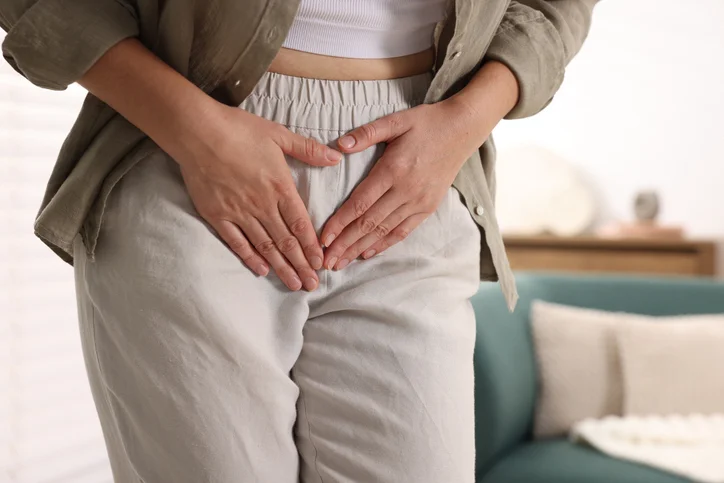
You’re laughing with friends. Sneezing. Running to catch the light rail. And then it happens, a small leak, or worse. You’ve learned to keep spare underwear in your bag. You avoid certain workouts. You’ve mapped every bathroom in Cherry Creek before you go anywhere.
Someone, probably years ago, told you this was normal. That it comes with age. That it comes with kids. That you should just deal with it.
They were wrong.
Urinary incontinence, any involuntary leakage of urine, isn’t a rite of passage. It’s a medical condition. And it has causes, categories, and treatments that work.
More than 38 percent of women in the United States experience it. You’re not alone. But you’re also not stuck.
The Four Types of Incontinence
Not all bladder leakage is the same. Identifying which type you have determines how it gets treated.
Stress Urinary Incontinence (SUI)
Leakage happens with physical pressure, coughing, sneezing, laughing, jumping, heavy lifting. The pelvic floor and urethral sphincter can’t maintain closure when abdominal pressure spikes.
This is the most common type, and it’s frequently dismissed as “just what happens after kids” or “just what happens with age.” It isn’t. It’s a structural issue with a structural solution.
Urge Urinary Incontinence (UUI)
Leakage preceded by a sudden, intense urge to urinate, even when your bladder isn’t full. The bladder muscle contracts unpredictably, forcing leakage before you can reach a bathroom.
Also called overactive bladder, this type often disrupts sleep, work, and travel. Women with UUI may plan entire days around bathroom access.
Mixed Urinary Incontinence (MUI)
A combination of stress and urge incontinence. Many women have both, leaking during exercise AND experiencing sudden urges. Treating only one component leaves the other unmanaged.
Overflow Incontinence
The bladder doesn’t empty properly, causing constant dribbling or frequent small leaks. Often related to urethral blockage or nerve dysfunction. Less common in women than men, but definitely occurs.
What Actually Causes It
Here’s what nobody tells you: incontinence isn’t caused by “getting old.” It’s caused by specific anatomical and physiological problems that have specific names.
Weakened Pelvic Floor Muscles
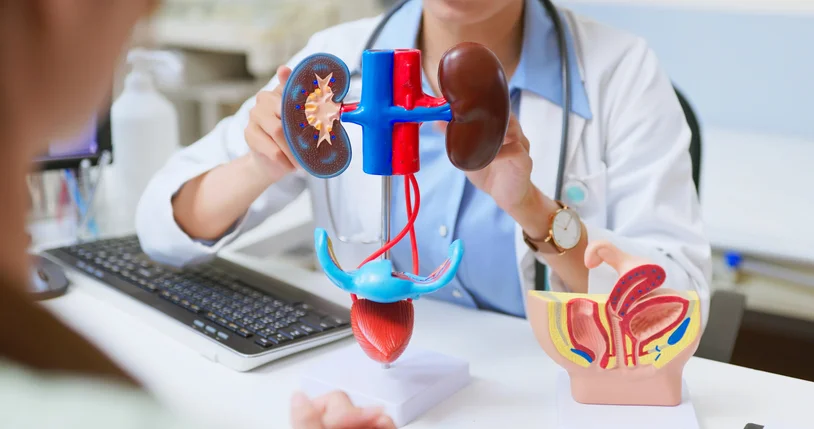
The pelvic floor is a hammock of muscle that supports your bladder, uterus, and bowels. Childbirth, chronic constipation, high-impact exercise, and prolonged standing can weaken these muscles over time. When they can’t adequately support the bladder neck and urethra, leakage occurs, especially with activities that increase abdominal pressure.
Urethral Sphincter Dysfunction
The sphincter is the muscle that keeps the urethra closed. When it doesn’t seal properly, due to nerve damage, hormonal changes, or tissue atrophy, stress incontinence follows.
Bladder Muscle Overactivity
The detrusor muscle of the bladder should relax while it fills and contract only when you choose to void. When it contracts involuntarily, you get urge incontinence. This is neurological, not behavioral.
Pelvic Organ Prolapse
When the bladder, uterus, or rectum descends from its normal position, often due to childbirth or aging, it can obstruct normal bladder function and contribute to leakage. Prolapse and incontinence frequently coexist.
Hormonal Decline
Estrogen supports the health of vaginal and urethral tissue. After menopause, declining estrogen causes tissue thinning, reduced blood flow, and decreased urethral closure pressure. This isn’t just “aging”, it’s a hormonal change with a hormonal solution.
Nerve Damage
From childbirth trauma, pelvic surgery, diabetes, or neurological conditions. Nerves that coordinate bladder function can be disrupted, causing overactivity, retention, or both.
Why “Just Doing Kegels” Doesn’t Always Work
You’ve probably been told to do Kegel exercises. And Kegels are useful, when done correctly and consistently. The problem is most women don’t know how to isolate the pelvic floor correctly, or their incontinence has progressed beyond what muscle strengthening alone can address.
Pelvic floor therapy with a trained physical therapist is more effective than self-directed Kegels because it includes biofeedback to confirm you’re targeting the right muscles, functional electrical stimulation to activate atrophic tissue, and manual therapy to release muscles in spasm.
But for many women, pelvic floor therapy is step one of a multi-step plan, not the complete solution on its own.
Your Treatment Options at Aguirre Specialty Care
Dr. Oscar A. Aguirre is a board-certified urogynecologist with a Fellowship in Female Pelvic Medicine and Reconstructive Surgery. Aguirre Specialty Care in Parker, Colorado, offers the full spectrum of incontinence treatment, from conservative therapy to advanced surgical intervention.
Non-Surgical Options
- FemiLift CO2 Laser Vaginal Resurfacing – Strengthens supporting ligaments around the bladder and urethra. Dr. Aguirre was among the first in the United States to offer this treatment. No surgery, no downtime.
- Pelvic Floor Therapy – Behavioral modification, bladder training, biofeedback, and functional electrical stimulation with a specialized physical therapist.
- Low-Dose Vaginal Estrogen – Cream, suppository, or ring to restore tissue health and improve urethral function. Minimal systemic absorption.
- InTone and Apex (At-Home Devices) – Voice-guided pelvic floor rehabilitation and muscle stimulation you use privately at home, with results tracked by Dr. Aguirre.
- OAB Medications – For urge incontinence, medications that relax the bladder muscle are often the first-line approach.
- Pessary – A removable vaginal device that supports prolapse and reduces stress incontinence without surgery.
Surgical Options
- Sub-Urethral Sling (RetroArc Sling, I-STOP) – A small synthetic mesh tape placed beneath the urethra to provide a firm surface for compression during physical activity. Outpatient procedure, one-week recovery.
- Urethral Injections (Bulkamid) – A bulking agent injected to narrow the urethra and reduce leakage.
- InterStim Therapy – A sacral neuromodulation device implanted to regulate bladder nerve signals. FDA-approved for urge incontinence and retention.
- Axonics Therapy – A rechargeable sacral nerve stimulation system. Dr. Aguirre was the first surgeon in Colorado to implant Axonics in 2019. Designed to last 15 years.
You Don’t Have to Live With It
If you’ve been managing your symptoms by wearing pads, avoiding activities you love, or planning your life around bathroom access, you don’t have to. These are coping strategies, not treatments.
The difference matters. Coping strategies don’t fix the problem. They just make it bearable while it potentially worsens.
Treatment actually addresses the underlying cause. And most treatments are less invasive than you assume. FemiLift is a 15-minute in-office procedure. Slings require one week of recovery. Many women are back to normal activity faster than they expected.
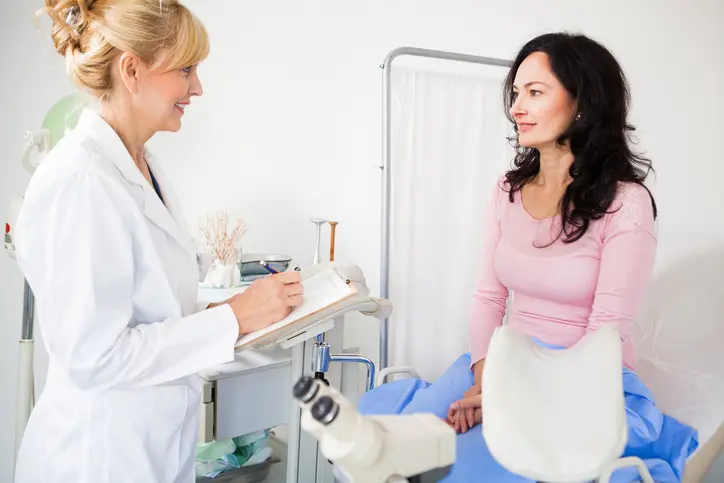
The first step is a proper diagnosis. That means someone who actually examines you, not just asks questions over the phone. Someone who determines whether you have stress incontinence, urge incontinence, prolapse, or a combination. Someone who then presents your options, not just one.
Take the First Step
Aguirre Specialty Care in Parker, Colorado offers same-day consultations. Dr. Aguirre will review your history, perform a thorough examination, and outline a treatment plan tailored to your specific presentation and goals.
Call 303-322-0500 or request a consultation online.
Your quality of life isn’t a small thing. Leakage that disrupts your workouts, your sleep, your confidence, and your intimacy is worth investigating.
You are not imagining it. You are not overreacting. And you don’t have to accept it.