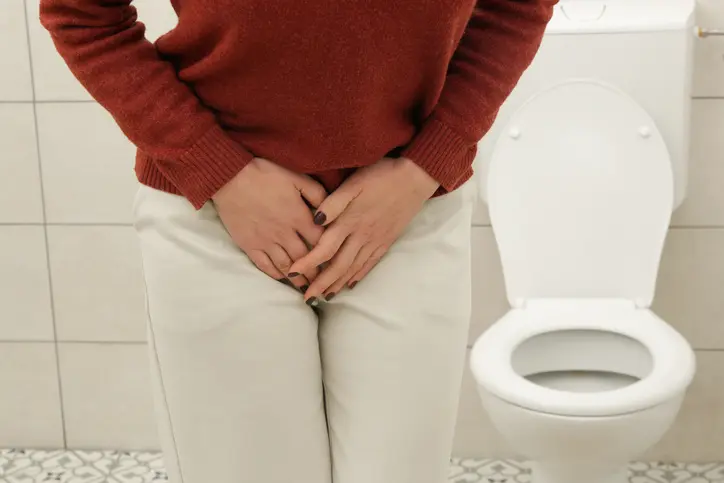





You keep a spare pair of leggings in the car, and you have quietly mapped every restroom between your Parker home and the office. What started as a few drops during a sneeze has become a reason to cross your legs before you laugh. So at what point does bladder leakage stop being a private nuisance and become a medical issue worth treating? Aguirre Specialty Care answers that question every week, and the threshold is lower than most women assume.
The instinct is to wait until it gets “bad enough.” That instinct costs you options. Let us define what actually counts, and where the line really sits.
What Counts as Urinary Incontinence?
Urinary incontinence is the involuntary loss of bladder control, ranging from occasional leaks during a cough to a frequent, urgent need to urinate. Clinicians measure severity by leak volume, frequency, and the impact on daily activities. Any leakage that limits your activity, requires protective pads, or disrupts your sleep warrants a medical evaluation.
Notice what that definition does not say. It does not say leakage has to soak through your clothes to matter. Aguirre Specialty Care treats women whose leaks are small but relentless, because frequency and disruption count just as much as volume.
How Much Leakage Is Too Much?
The honest answer is simpler than a measurement: any leakage that changes how you live is too much. If you have started avoiding the trampoline with your kids, skipping the second glass of water before a meeting, or wearing dark clothing as insurance, the leakage has already crossed the line.
Consider the quiet chain reaction. Small leaks prompt daily pad use. Pad use signals a persistent problem. A persistent problem steadily shrinks the activities you feel safe doing. Aguirre Specialty Care sees that shrinking radius as the real measure of severity, not the number of milliliters on a lab report.
Warning Signs You Should Not Ignore
Some symptoms move incontinence from “schedule a consult” to “do not wait.” Dr. Aguirre urges prompt evaluation when leakage arrives with any of the following:
- Blood in the urine or pain and burning when you urinate, which can signal infection or another condition.
- A sudden onset of leakage with no obvious cause, rather than a gradual change.
- Recurrent urinary tract infections that keep returning after treatment.
- A feeling of pelvic pressure or a bulge, which can point to pelvic organ prolapse.
- Difficulty emptying your bladder or a sense that it never fully empties.
These signs do not mean something is seriously wrong, but they do mean the cause needs to be identified rather than managed with pads.
Occasional vs. Concerning Leakage
|
Situation |
Often Manageable |
Time to Seek Care |
|
A rare leak with a hard sneeze or cough |
Yes, monitor it |
If it becomes a daily pattern |
|
Leaks that require a pad |
No |
Yes, this is treatable |
|
Waking overnight to rush to the bathroom |
No |
Yes, especially if sleep suffers |
|
Avoiding exercise, travel, or intimacy |
No |
Yes, quality of life is affected |
|
Blood, pain, or a pelvic bulge |
No |
Promptly |
If your honest answers land in the right-hand column, the leakage has earned a visit.
Why Waiting Costs You Options
Early evaluation widens the menu. Mild stress incontinence often responds to conservative, non-surgical care, while severe or long-neglected cases may need a more involved correction. Aguirre Specialty Care offers a full range, from pelvic floor physical therapy and the Bulkamid urethral bulking injection to FemiLift laser tissue support, bladder Botox, and sacral neuromodulation for stubborn urge symptoms. The earlier Dr. Aguirre pinpoints the cause, the gentler the fix tends to be.
What to Do Before Your Visit
A little preparation makes your consultation far more productive. Aguirre Specialty Care recommends this simple sequence:
- Keep a three-day bladder diary: fluids in, bathroom trips, and every leak with its trigger.
- Note what sets off your leaks, whether it is pressure (coughing, lifting) or sudden urgency.
- Track how many protective pads you use in a typical day.
- List your current medications and write down the questions you most want answered.
This record turns a vague complaint into concrete data that speeds an accurate diagnosis.
Frequently Asked Questions
Is some leakage normal after childbirth?
It is common, but common is not the same as normal or permanent. Postpartum leaks often improve with pelvic floor therapy, and Aguirre Specialty Care can treat those that persist.
How many pads a day is too many?
If you rely on any pad specifically for leaks, that alone is reason to be evaluated. The goal is control, not better containment.
Will bladder leakage go away on its own?
Sometimes mild, temporary leaks resolve, but persistent leakage usually reflects an underlying cause that will not fix itself. Dr. Aguirre identifies that cause rather than waiting it out.
Does seeking treatment mean I need surgery?
No. Many women improve with non-surgical options. Surgery is one tool among several, and it is never the automatic starting point.
You Do Not Have to Live Around the Bathroom
If you are planning your day around restrooms, the leakage is already too much. Schedule your urinary incontinence evaluation at Aguirre Specialty Care and let Dr. Aguirre identify the cause and match you to the least invasive treatment that restores your control.
Aguirre Specialty Care: urogynecology and urinary incontinence treatment for women in Parker and the greater Denver area.